Theranos, once valued at $9 billion, collapsed after a vast web of deception exposed that its core blood-testing technology did not work, leading to its dissolution in 2018, criminal convictions for its leadership, and widespread financial and public health consequences.
Founded in 2003 by 19-year-old Stanford dropout Elizabeth Holmes, the company, initially named “Realtime Cures”, set out to disrupt the $75 billion blood-testing industry dominated by Labcorp and Quest Diagnostics. Its central claim was that a proprietary device, the “Edison,” could run more than 200 diagnostic tests using just a few drops of blood from a finger prick, replacing traditional venous blood draws.
Get more exclusive breaking news updates on our WhatsApp channel .
From the outset, experts raised concerns. Stanford professor Phyllis Gardner warned that Holmes’ early concept, a patch capable of diagnosing and treating conditions simultaneously, was physically impossible. Despite this, Holmes secured backing from engineering professor Channing Robertson, who became an early advocate.
As development progressed, the technology failed to meet its claims. The Edison device could reliably perform only about 12 tests, and for some, such as testosterone, results were 87% unreliable. To conceal these failures, Theranos secretly relied on commercial analysers from Siemens, diluting finger-prick samples to meet testing requirements while presenting the results as if generated by its own system.

The company’s operations evolved from optimistic exaggeration into systematic fraud. Holmes falsified documents, including altering a Pfizer report that had expressed scepticism and presenting it to Walgreens as a positive validation. She misrepresented financial performance, claiming $140 million in revenue in 2014 with projections of $1 billion the following year, when actual revenue was just $14,000. Holmes also falsely stated that the U.S. military was using Theranos devices in Afghanistan.
Demonstrations for investors and officials were staged. During a visit by then-Vice President Joe Biden, the company constructed a fake laboratory to simulate legitimate operations.
Theranos’ credibility was reinforced by a high-profile board that included George Shultz, Henry Kissinger, James Mattis and Bill Frist. However, most members lacked expertise in laboratory science and relied exclusively on information provided by Holmes and Chief Operating Officer Sunny Balwani, who also maintained a secret romantic relationship with Holmes. The company enforced strict secrecy, avoided peer-reviewed publications, and used non-disclosure agreements and litigation threats to silence employees.
The collapse began internally when whistleblower Tyler Schultz identified unreliable test results and reported violations to regulators. After being dismissed by Balwani, he contacted journalist John Carreyrou, whose October 2015 investigation exposed the company’s practices.
Holmes initially denied wrongdoing, publicly insisting, “We know what we’re doing, and we’re very proud of it,” but the report triggered regulatory action. The Centres for Medicare and Medicaid Services revoked Theranos’ laboratory license, citing risks to patient safety, and banned Holmes and Balwani from lab operations for two years. Walgreens shut down 40 testing centres and sued to recover its $140 million investment, eventually settling for $30 million, while Safeway abandoned a $350 million partnership. The U.S. Securities and Exchange Commission charged both executives with “massive fraud” related to $700 million raised from investors.
At its peak, Theranos employed more than 800 people, but fewer than 25 remained when the company shut down in September 2018.
The human and financial toll was severe. Investor losses totalled approximately $945 million, with major losses incurred by figures such as the Walton family, Rupert Murdoch, and the DeVos family. Approximately 945,000 patients received unreliable medical test results, raising the risk of misdiagnosis of serious conditions, including cancer.
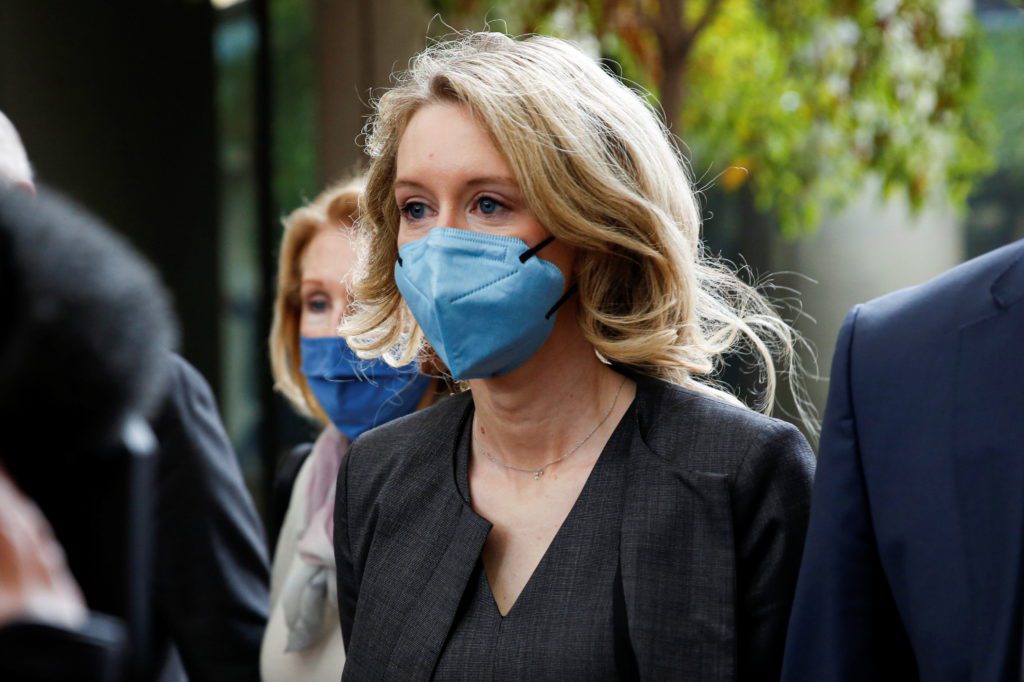
Following a 2018 federal indictment, Holmes and Balwani were tried separately. Holmes was convicted in January 2022 on four counts of fraud and sentenced to over 11 years in prison, later reduced to 10 years for good behaviour. Balwani was convicted on all 12 counts against him and sentenced to 13 years.
The Theranos case stands as a stark example of how a culture of secrecy, weak oversight, and escalating deception can transform a high-profile startup into a large-scale corporate fraud, with lasting consequences for investors, patients, and the broader technology and healthcare sectors.