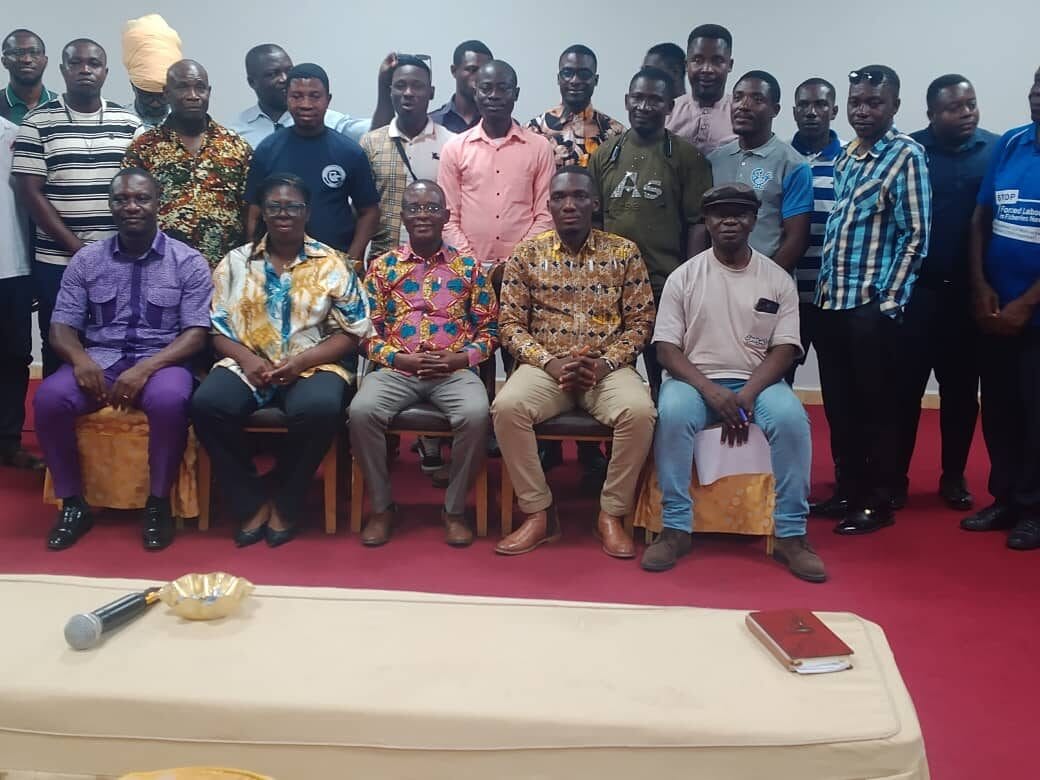
The Friends of the Nation (FoN), in partnership with ProSea Marine Education, has organised a one-day training in Takoradi to equip selected journalists from the Western Region’s coastal belt with skills to better report on safety issues in the fisheries sector.
The workshop, held under the Marine SafeNet Ghana Project, aimed to strengthen fisheries governance by empowering the media to highlight the dangers and challenges faced by artisanal fishers.
Get more exclusive breaking news updates on our WhatsApp channel .
Mr Mevuta Donkris, Executive Director of FoN, underscored the importance of partnering with journalists, noting that their work significantly shapes public understanding and policy direction.
He stressed that fisher safety is a global concern, describing small-scale artisanal fishers as crucial to food security and livelihoods yet often overlooked.

Citing international statistics, he said fishing remains one of the world’s most dangerous professions, with the International Labour Organisation estimating 24,000 fisher deaths annually and the Food and Agriculture Organisation reporting an average of 80 fatalities daily.
The situation in West Africa, he noted, is particularly alarming, with climate-related poor weather leading to the disappearance of around 100 artisanal fishers at sea each year.
Mr Donkris said FoN and its partners were actively working to improve safety, fairness and sustainability in the fisheries sector through various interventions, including livelihood empowerment.
However, he emphasised that the media’s role remained indispensable in raising awareness, shaping policy and telling the stories of fishers with accuracy and empathy.
Mr Philip Prah, a Project Officer with FoN, revealed that the NGO was documenting safety concerns in the artisanal fishing sector and had introduced a solar-powered tracking device to support fishers, especially in areas with no mobile network coverage.
Another Project Officer, Mr Obrempong Yaw Ampofo, explained that the training was designed to help journalists pay closer attention to safety issues within small-scale fishing communities.
Participants pledged to prioritise the safety of artisanal fishers in their reportage, recognising their role in promoting safer seas and more resilient coastal communities.