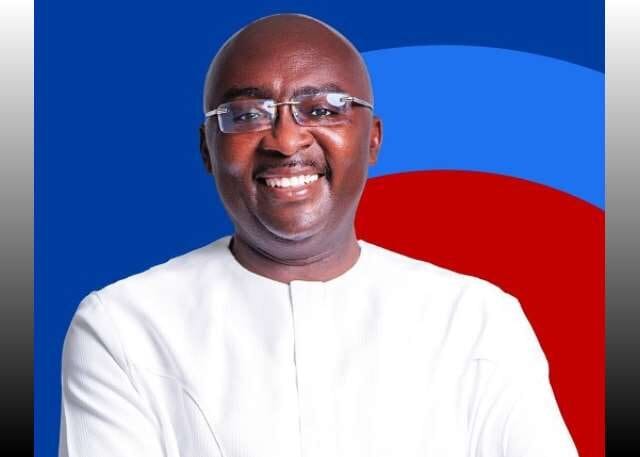
In a rare moment of candour that has stunned the nation, former Vice President Dr Mahamudu Bawumia has admitted that many members of his party, the New Patriotic Party (NPP), became “very rich” under his leadership.
Speaking on live television, Dr Bawumia claimed that “a lot of people in the party who were not rich became very rich within his eight years in office”, crediting his own efforts and political influence for their transformation.
Even more controversially, he urged these now-wealthy individuals to “bring out their money” to support the party’s campaign ahead of the 2028 general elections.
Get more exclusive breaking news updates on our WhatsApp channel .
This statement, made with startling boldness, has triggered public outrage and renewed debate about corruption, cronyism, and the abuse of political power in Ghana. Critics say it is not just an offhand remark but an inadvertent confession of how state resources and influence may have been exploited for partisan enrichment during the NPP’s time in office.
Dr Bawumia’s declaration strikes a painful chord in a nation still reeling from economic hardship, youth unemployment, and a collapsed cedi. His words contrast sharply with the government’s earlier promises of inclusive economic growth and job creation. Instead of celebrating national prosperity, he appeared to glorify the sudden wealth of a select few political insiders.

The former Vice President’s remarks raise urgent questions: How did these individuals become rich? Were their fortunes built through government contracts, nepotism, or misappropriated public funds? Were proper procurement procedures followed? Did taxpayers get value for money?
Beyond these questions, attention has also turned to Dr Bawumia’s own financial standing. Once introduced to Ghanaians as a humble technocrat and economist, he is now frequently seen funding party events and wielding considerable financial influence. Citizens are asking: How did he amass such resources? Has he declared his assets and paid the appropriate taxes? What steps are institutions like the Ghana Revenue Authority, Economic and Organised Crime Office (EOCO), and the Office of the Special Prosecutor taking to investigate these matters?
Observers argue that Dr Bawumia’s comments expose a worrying culture of state capture, where political power serves insiders rather than citizens. As the head of Ghana’s economic management team, he oversaw a period marked by record inflation, debt default, and a return to the IMF.
For many Ghanaians, his remarks are not just politically reckless; they are deeply insulting. They highlight a government that seemingly enriched a few while the majority faced economic despair.
The call for accountability is growing louder. Ghanaians demand transparency: Who are these beneficiaries? How was their wealth created? And what role did public office play in their enrichment?
Until Dr Bawumia publicly names names, declares his own assets, and provides clear answers, his call for the wealthy to “bring out the money” will continue to sound less like a rallying cry, and more like a confession of Ghana’s broken political morality.