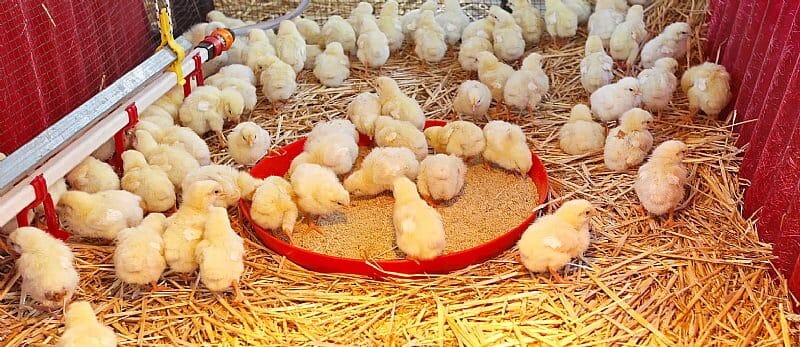
I once read a story about four sons, a few chickens and four different ways of thinking about money. It was meant as a lesson in finance. I read it and thought immediately of Ghana.
So let us bring the story home. Let the father be Mr. Asare. Let his sons work from a poultry yard somewhere in Ghana. And let us call the lesson the Nkoko Nkiti Nkiti Mindset.
Get more exclusive breaking news updates on our WhatsApp channel .
The idea is simple. Start with what you have. Make it productive. Reinvest what it produces. Grow capacity without consuming tomorrow before tomorrow arrives.
Mr. Asare gives each son the same amount of money.

The first buys chickens outright. His logic is straightforward: I have money, I need chickens, so I buy chickens.
Ghana knows this son.
Need a road? Find money. Need a hospital? Find money. Need a power project? Borrow. Need to close a budget hole? Borrow again.
We bought the chickens.
Some laid eggs. Some did not.
But the debt belonged to us either way.
The second son asks a better question: Must I own every chicken before I can benefit from the eggs?
He leases, partners and shares production. The objective remains eggs, but less capital is trapped in ownership.
That is a question Ghana must ask more often. Government does not need to own and finance every commercially viable asset simply because the country needs it. Private capital, concessions and properly structured partnerships can carry appropriate risk while scarce public money is reserved for responsibilities only the state can perform.
The third son thinks about time.
Can tomorrow’s eggs finance more chickens today?
He secures buyers for future production and uses credible future cash flow to expand.
Here Ghana’s story becomes uncomfortable.
Borrowing against tomorrow is not inherently foolish. Governments do it everywhere. The important question is what tomorrow receives in return.
For years, Ghana borrowed against tomorrow without always creating enough productive capacity to meet tomorrow’s obligations.
Then tomorrow arrived.
It came carrying debt distress, restructuring, arrears, energy liabilities and a public purse with very little room to manoeuvre.
That is the fiscal cliff.
The fourth son studies all three brothers.
From the first, he learns ownership.
From the second, access.
From the third, cash flow.
Then he adds discipline.
Own what must be owned. Partner where partnership works. Borrow only when future value can credibly justify today’s obligation. Never confuse access to money with creation of wealth.
That is the Nkoko Nkiti Nkiti Mindset Ghana needs.
Every major public expenditure should now face the chicken test.
A billion cedis for a road?
Where are the eggs?
Lower transport costs? More trade? Greater farm access?
An industrial park?
Where are the factories, jobs and exports?
Energy investment?
Where are the reduced losses?
Digitalisation?
Where are the savings and additional revenue?
Not every public investment must produce cash. Schools, hospitals, security and social protection create value that cannot always be counted at a cash register.
But every major expenditure must create value proportionate to its cost.
Because a chicken that does not lay eggs does not become productive simply because we borrowed money to buy more of it.
Ghana will not jump its fiscal cliff by learning how to borrow harder.
It will jump it when every cedi sent out returns carrying value.
That is the Nkoko Nkiti Nkiti Mindset.
And perhaps our most important fiscal question is also our simplest:
Where are the eggs?