

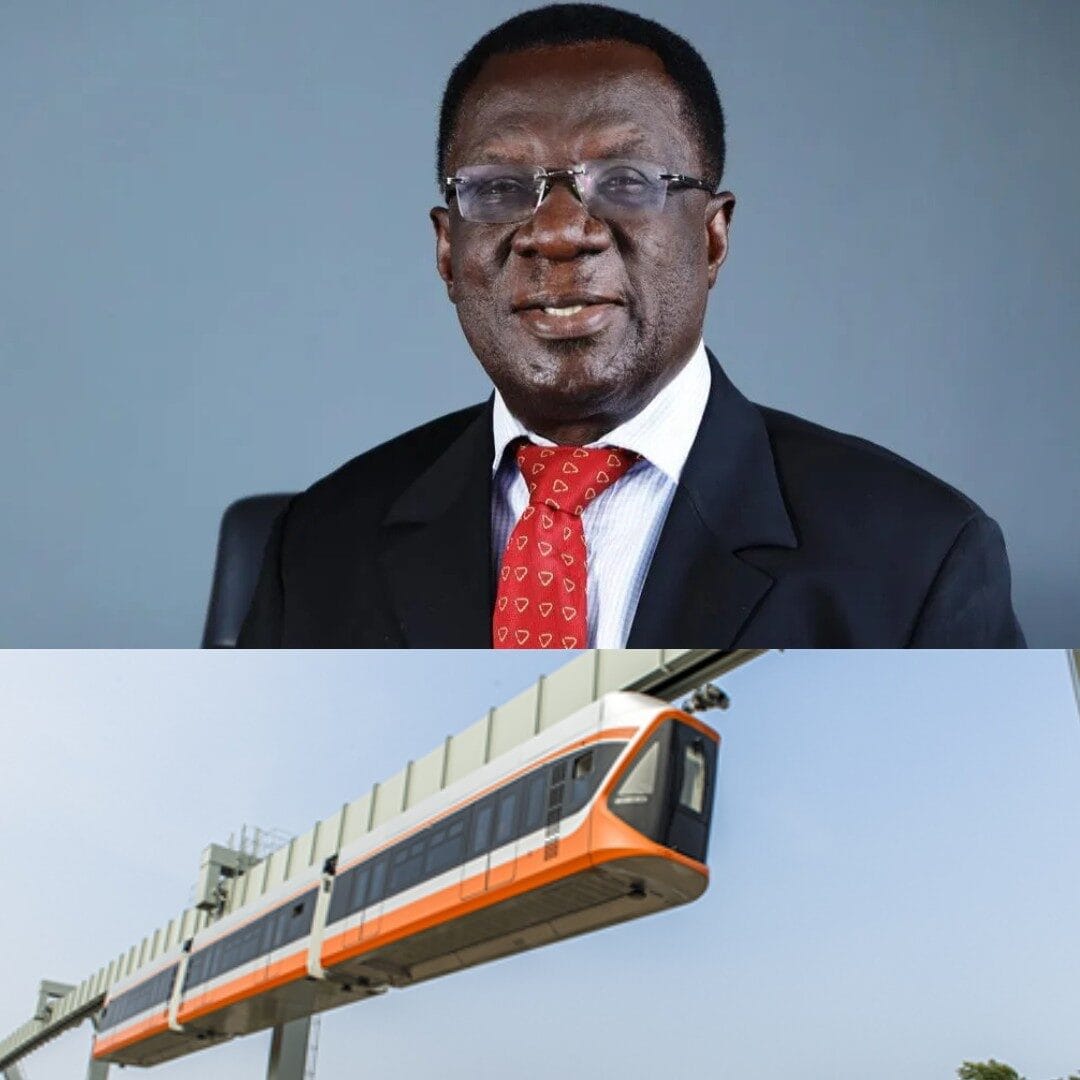
Mr. Duke Aaron Sasu, counsel for Professor Christopher Ameyaw-Akumfi, the former Board Chairman of the Ghana Infrastructure Investment Fund (GIIF), has formally notified the Accra High Court of his intention to withdraw his legal representation.
The court, presided over by Justice Audrey Kocuvi-Tay, confirmed receipt of the Notice of Withdrawal filed on September 11, 2025. Prof. Ameyaw-Akumfi, together with Mr. Solomon Asamoah, former Chief Executive Officer of GIIF, is standing trial on charges of willfully causing financial loss to the State, intentional dissipation of public funds, and conspiracy to commit crime.
Get more exclusive breaking news updates on our WhatsApp channel .
The charges stem from a transaction involving an alleged $2 million loss to the State in connection with the proposed Accra SkyTrain project, a high-profile urban light rail initiative intended to ease traffic congestion in the capital.
Prof. Ameyaw-Akumfi informed the court that his lawyer’s withdrawal was due to a misunderstanding between them, which was currently under mediation and expected to be resolved within the week.

He has been granted bail of GHS 10 million with two sureties, one of which must be justified with landed property located in Greater Accra, while his co-accused, Asamoah, was granted GHS 15 million bail, with both sureties justified by registered properties within the same region.
Meanwhile, Asamoah has filed an appeal challenging the court’s decision to dismiss his application for further disclosures, though Deputy Attorney General Dr. Justice Srem-Sai told the court that the AG’s office had not yet been served with the appeal.
The case has been adjourned to October 20, 2025, for further hearing.
The Accra SkyTrain project, launched in 2018, was a proposed elevated light rail system intended to reduce traffic congestion and air pollution in Accra. A Memorandum of Understanding was signed between the Government of Ghana and AiSky Train Consortium of South Africa, followed by a build-operate-transfer agreement in 2019. The project, estimated to cost $2.6 billion, was designed to transport 10,000 passengers per hour per direction but stalled amid financial and feasibility concerns.