
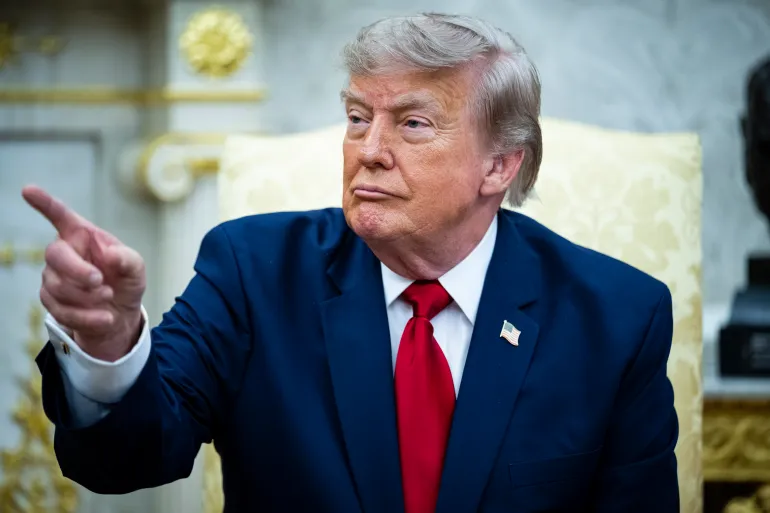
The legal doctrine of executive privilege has become a central issue in the investigation into former United States President Donald Trump’s handling of government documents after a federal judge approved the appointment of a special master to review materials seized from his Mar-a-Lago residence.
The decision allows an independent third party to examine the documents to determine whether some are protected by executive privilege or attorney-client privilege.
Get more exclusive breaking news updates on our WhatsApp channel .
Executive privilege is a legal principle that enables a sitting president to withhold certain White House communications and records from Congress and the courts to preserve confidential advice and decision-making within the executive branch.
During his presidency, Mr Trump repeatedly invoked executive privilege in efforts to block the release of documents and testimony sought by congressional investigations, including during his first impeachment inquiry. However, no court ruled on the merits of those claims while he remained in office.

The issue has become more complex because Mr Trump is no longer president. United States courts have not definitively ruled on whether former presidents can continue to assert executive privilege after leaving office.
The Supreme Court avoided resolving the question when it declined to block the release of White House records sought by the congressional committee investigating the January 6, 2021, attack on the US Capitol.
Legal experts say the uncertainty leaves Mr Trump’s claim on uncertain legal ground.
To succeed, they argue, the former president would first have to establish that he retains the authority to invoke executive privilege after leaving office. He would also need to overcome President Joe Biden’s determination that the privilege does not apply to the documents in question and demonstrate that any harm from disclosure outweighs the government’s interest in using the records for its criminal investigation.
The dispute has also raised questions over the role of the special master.
Legal scholars note that appointing an independent third party to assess claims of executive privilege is highly unusual, with some describing the move as unprecedented.
They argue that executive privilege is a constitutional power vested in the presidency and that disputes over its application have traditionally been resolved within the executive branch or by the courts rather than by a court-appointed reviewer.
The outcome of the case is expected to have significant implications for the scope of executive privilege and the legal powers available to former presidents in disputes involving presidential records.