Dr Audrey Smock Amoah, Acting Director-General of the National Development Planning Commission (NDPC), has called for urgent, strategic investment in Ghana’s human capital to prepare the country’s workforce for rapid global changes and secure long-term national prosperity.
Speaking at an Inter-Ministerial Coordination Meeting in Accra on Thursday on Ghana’s National Human Capital Development Strategy (2026–2057), Dr Amoah warned that Ghana’s current trajectory demands deliberate action.
Get more exclusive breaking news updates on our WhatsApp channel .
She cited the World Bank’s Human Capital Index, which places Ghana’s score at about 0.45, meaning a child born in the country today is projected to achieve only 45 per cent of full productivity potential by age 18 under existing health and education conditions.
She described the figure as a stark reminder of the need to significantly improve learning outcomes, strengthen health systems, enhance skills development, and raise national productivity levels.

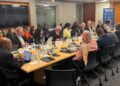
The meeting brought together policy-makers, directors, and educational experts from various ministries, departments, and agencies, all contributing to the shaping of Ghana’s long-term human capital agenda.
Dr Amoah emphasised that socio-economic transformation is inseparable from investment in people, particularly at a time of rapid technological disruption driven by artificial intelligence.
She stressed that Ghana must strategically equip its population with the skills, competencies, and capabilities that foster innovation and support national development.
She noted Ghana’s aspiration to achieve high-income status by 2057, targeting a minimum nominal GDP of US$3.4 trillion and per capita GDP of not less than US$50,000.
Despite progress in health and education over the years, she said, persistent gaps limited the country’s ability to fully leverage its natural resource wealth, including gold, diamond, and crude oil, for transformative growth.
Dr Amoah also warned of demographic pressures, labour-market mismatches, skilled labour outflows, and sectoral fragmentation, arguing that coordinated ministerial support is “absolutely necessary.”
She said the new Human Capital Development Strategy aligns with the President’s “Resetting Ghana Agenda,” which focuses on rebuilding economic foundations, strengthening institutions, restoring productivity, and centring people in national development.
“Resetting Ghana requires more than stabilising the present; it requires preparing our people for the future,” she said.
Dr Kwabena Bempah Tandoh, Co-Principal Investigator and Country Research Manager of Thrive Ghana, a technical support organisation for the strategy, underscored that human capital remains the most valuable asset of any nation.