Friday, May 1, 2026
  • Home
  • About
  • Contact
  • Sitemap
  • Login
  • Register
The Ghanaian Standard
  • Home
  • Latest
    • General
    • Education
    • Environment
    • Health
    • Social
    • Tech
  • TrendingHot
  • Politics
    • Legal
    • Crime
    • Security
  • Business
    • Economy
    • Finance
  • Opinion
  • Sports
    • Boxing
  • International
  • Featured
    • Profiles
  • Job Vacancies
No Result
View All Result
  • Home
  • Latest
    • General
    • Education
    • Environment
    • Health
    • Social
    • Tech
  • TrendingHot
  • Politics
    • Legal
    • Crime
    • Security
  • Business
    • Economy
    • Finance
  • Opinion
  • Sports
    • Boxing
  • International
  • Featured
    • Profiles
  • Job Vacancies
No Result
View All Result
The Ghanaian Standard
No Result
View All Result
Home Business Economy

BoG supplies about $10bn to forex market in 2025 under intermediation framework as IMF flags transparency and gold prices surge

Kelvin KokrokoCaleb Wuninti ZiblimbyKelvin KokrokoandCaleb Wuninti Ziblim
December 15, 2025
in Economy
Reading Time: 3 mins read
BoG supplies about $10bn to forex market in 2025 under intermediation framework as IMF flags transparency and gold prices surge

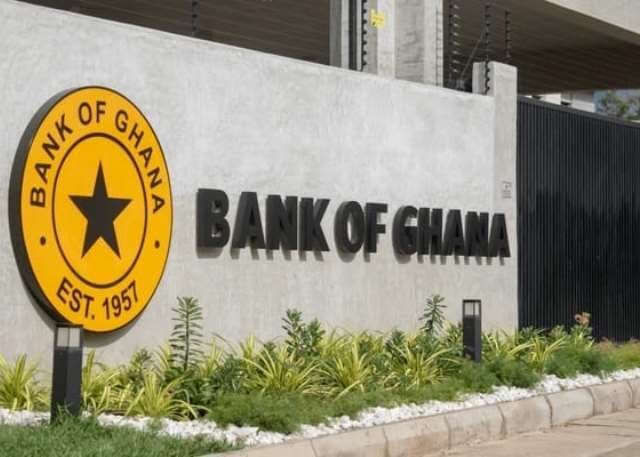
The Bank of Ghana (BoG) is reported to have supplied about $10 billion to the foreign exchange market in 2025 through what it describes as a forex intermediation framework, rather than a direct intervention, as scrutiny grows over the scale, source and sustainability of the support for the cedi.

Earlier in the year, the International Monetary Fund (IMF) raised concerns after the central bank used $1.4 billion within the first three months of 2025.

Get more exclusive breaking news updates on our WhatsApp channel .

While the Fund did not oppose interventions in principle, it insisted they must be transparent, limited and consistent with a market-determined exchange rate, rather than an attempt to hold the currency at a fixed level.

In response, the Bank of Ghana pledged to introduce a clear intermediation policy by the end of September, a commitment it has since fulfilled.

Under the new framework, the Bank publicly announces the amount of foreign exchange it intends to inject each month, a move designed to improve transparency and signal continued reliance on market conditions.

In October, the Bank announced an intervention of $1.15 billion, followed by $1 billion in November and $800 million in December.

Excluding the $1.4 billion used in the first quarter, the Bank supplied approximately $6 billion between April and September, averaging about $1 billion per month.

Where market players do not take up the full amount offered, the unused portion is added to the country’s reserves.

Ghana’s gross international reserves have now risen to $11.4 billion, equivalent to 4.8 months of import cover, the highest level recorded since the economic crisis.

The scale of the interventions has raised key questions about how the Bank is sourcing such large volumes of dollars, whether the pace is sustainable, and whether the reserves face significant risk.

Before Ghana lost access to the Eurobond market, the country was able to raise as much as $3 billion annually between 2019 and 2021, and about $1 billion per year in the preceding years.

Together with gold, cocoa and, to some extent, oil exports, these inflows formed the backbone of foreign exchange support for the cedi.

Once access to international capital markets was lost, reliance shifted heavily to gold and cocoa exports.

In 2025, gold has emerged as the dominant factor. The return of Donald Trump to the White House and broader geopolitical tensions have pushed gold prices to unprecedented levels.

The average gold price stood at about $2,300 per ounce in 2024, but crossed $4,000 per ounce for the first time in 2025 and is currently hovering around $4,200.

This surge is the primary reason the Bank of Ghana has been able to intervene so aggressively in the forex market.

A second layer to the intervention strategy involves the establishment of the Ghana Gold Board.

The Board was initially expected to be financed through a $279 million revolving fund from the central government, but that model has changed.

It is now financed through a more complex arrangement involving commercial banks and the Bank of Ghana.

Under one model, the Bank of Ghana collects cedis from commercial banks and forwards the funds to the Gold Board to purchase gold from small-scale miners.

The gold is sold, the dollar proceeds are returned to the Bank, and the Bank then supplies the commercial banks with the foreign exchange they require.

Under a second model, the Bank uses high-powered money to purchase gold directly from the Gold Board. The gold is either sold for foreign exchange, which is added to reserves, or refined and added to Ghana’s gold reserves.


Tags: BOGIMF

Related Stories

IMF approves $266M loan for Liberia

IMF approves $266M loan for Liberia

Ghana showcases economic recovery at IMF/World Bank Spring Meetings

Ghana showcases economic recovery at IMF/World Bank Spring Meetings

Ato Forson engages World Bank on growth agenda at IMF meetings

Ato Forson engages World Bank on growth agenda at IMF meetings

Ghana gold coin prices rise with global market trends

Ghana gold coin prices rise with global market trends

Premium Website Design for SMEs, Brands & Institutions Premium Website Design for SMEs, Brands & Institutions Premium Website Design for SMEs, Brands & Institutions
ADVERTISEMENT

Trending News

Catholic Conference of Major Superiors of Religious Ghana urges continued fight against illegal mining amid ecological and human rights concerns

Catholic Conference of Major Superiors of Religious Ghana urges continued fight against illegal mining amid ecological and human rights concerns

MMDCEs in Ghana

FULL LIST: MMDCEs in Ghana

GES concludes nationwide campaign against exam malpractice

GES concludes nationwide campaign against exam malpractice

Vice President launches student entrepreneurship programme at UPSA

Vice President launches student entrepreneurship programme at UPSA

What happened to Nike?

What happened to Nike?

The Ghanaian Standard

The Ghanaian Standard is an independent news media platfrom trusted by Ghanaian worldwide for breaking news coverage of Ghanaian politcs, business, social, legal, crime news and opinion essays. We are baed in Accra, Ghana

Browse by Category

  • Boxing
  • Business
  • Crime
  • Economy
  • Education
  • Entertainment
  • Environment
  • Expose
  • Featured
  • Finance
  • Health
  • History
  • International
  • Legal
  • Music
  • News
  • Opinion
  • Politics
  • Profiles
  • Science
  • Security
  • Social
  • Speeches
  • Sports
  • Technology
  • TV & Cinema

Contact

Soursop St GS-0750-8619, Iron City-Amanfrom, Ga South, Accra – Ghana

Phone: 233 55 091 9202
Email: contact@ghstandard.com

Follow Us

  • About
  • Contact
  • Sitemap

© 2025 The Ghanaian Standard - Breaking news in Ghana today | Designed by EnspireFX Websites | Powered by StellerHost

Welcome Back!

Login to your account below

Forgotten Password? Sign Up

Create New Account!

Fill the forms below to register

All fields are required. Log In

Retrieve your password

Please enter your username or email address to reset your password.

Log In
No Result
View All Result
  • Home
  • Latest
    • General
    • Education
    • Environment
    • Health
    • Social
    • Tech
  • Trending
  • Politics
    • Legal
    • Crime
    • Security
  • Business
    • Economy
    • Finance
  • Opinion
  • Sports
    • Boxing
  • International
  • Featured
    • Profiles
  • Job Vacancies
  • Login
  • Sign Up

© 2025 The Ghanaian Standard - Breaking news in Ghana today | Designed by EnspireFX Websites | Powered by StellerHost