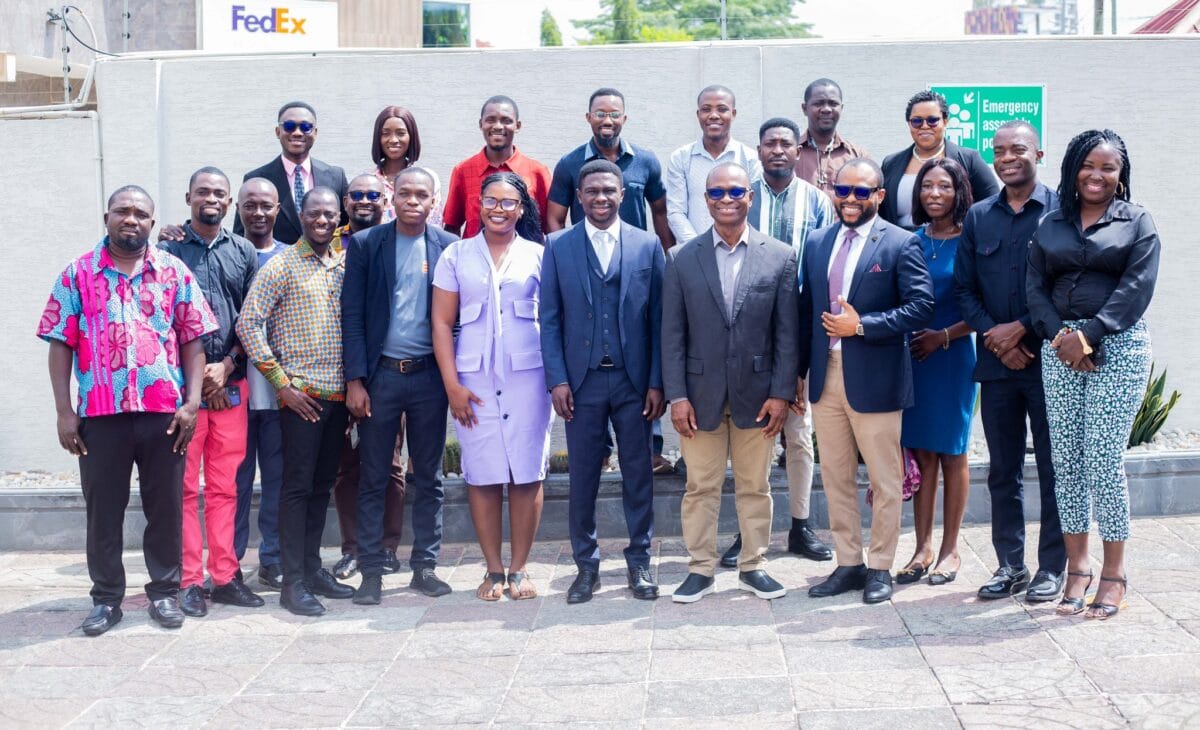
The Office of the Special Prosecutor (OSP), in collaboration with the German Development Cooperation (GIZ), has organised a three-day capacity-building workshop for Ghanaian journalists aimed at equipping them with investigative tools and techniques to help fight illicit financial flows (IFFs) in the country.
The training, held in Accra from Wednesday, October 22 to Friday, October 25, formed part of GIZ’s Participation, Accountability and Integrity for a Resilient Democracy (PAIReD) programme, which seeks to strengthen governance systems through enhanced accountability, integrity, and citizen participation.
Get more exclusive breaking news updates on our WhatsApp channel .
PAIReD is a four-year initiative commissioned by the German Federal Ministry for Economic Cooperation and Development, co-financed by the European Union and the Swiss State Secretariat for Economic Affairs, and implemented by GIZ in partnership with Ghana’s Ministry of Finance.
The workshop was designed to build the capacity of journalists while promoting collaboration between anti-corruption institutions and the media. Participants were trained in investigating financial crimes, tracking illicit financial flows, fact-checking, storytelling, and understanding the legal framework and operations of the OSP.

Mr Kweku Obeng, Component Manager of PAIReD at GIZ, emphasised the importance of collaboration between journalists and the OSP, describing it as crucial to Ghana’s anti-corruption drive.
“When these two work hand in hand, truth gains a voice, justice gains traction, and citizens gain confidence in the systems that serve them,” he said.
He explained that the partnership was rooted in the belief that corruption must not only be punished but also prevented, and that public trust could be achieved through professionalism and transparency.
“Investing in journalists’ capacity is essential to the fight against corruption, as journalists serve as the eyes, ears and conscience of society,” Mr Obeng added. “When empowered with the right knowledge and ethical tools, they become agents of accountability who inspire public demand for integrity in governance.”
Mr Samuel Appiah Darko, Director of the Strategy, Research and Communication Division at the OSP, commended the participating journalists, describing them as “not just reporters but reformers, not just storytellers but nation-builders.”
He said the OSP was established in line with international, regional, and national anti-corruption frameworks to serve as an independent institution and “disruptor” in Ghana’s fight against corruption.
“When journalists and anti-corruption institutions engage constructively, we create an ecosystem of accountability, one that protects the public purse, strengthens institutions, and uplifts national confidence,” Mr Darko stated.
The training facilitator, Mr Emmanuel K. Dogbevi, an investigative journalist of international repute, noted that probing illicit financial flows and financial crimes is often complex and demanding.
“The subject matter isn’t on the surface. It’s not easy to just look at information and conclude that a certain conduct or act has led or is leading to illicit financial flows,” he explained.
He urged journalists to collaborate with stakeholders to sustain the fight against IFFs and corruption, stressing the need for continuous training and funding support for investigative journalism.
“We owe it to ourselves and the stability of this country to ensure that the fight to stem illicit financial flows and financial crimes succeeds,” Mr Dogbevi said, calling for increased provision of reporting grants to support long-term investigations that could span over a year.