Participants at an economic dialogue have called for decisive leadership and the effective implementation of sound economic policies to help Ghana overcome its current economic challenges and build a more resilient economy.
The discussants argued that Ghana’s continued dependence on raw material exports instead of industrialisation is largely the result of weak policy implementation rather than a lack of ideas.
Get more exclusive breaking news updates on our WhatsApp channel .
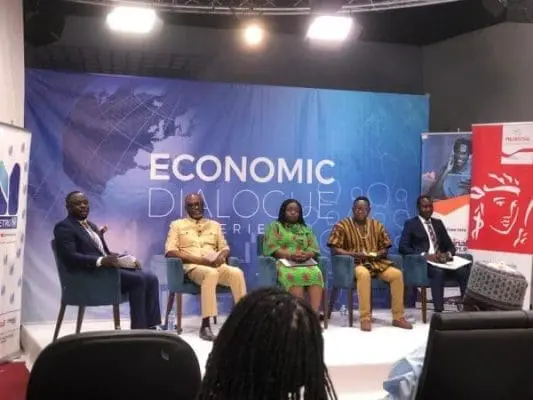
The dialogue, held on the theme “Fixing the Ghana Cedi: Key to Sustainable Growth,” brought together development economists, labour leaders and business representatives to discuss solutions to the country’s economic difficulties.
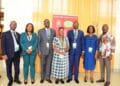
The panel featured Senior Lecturers at the University of Ghana Business School, Dr Agyapomaa Gyeke-Dako and Dr Adu Sarkodie, President of the Ghana Union of Traders’ Associations (GUTA), Dr Joseph Obeng, General Secretary of the General Agricultural Workers’ Union (GAWU), Edward Kareweh, and was chaired by Dr Sam Ankrah.

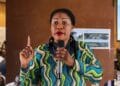
Dr Gyeke-Dako attributed the depreciation of the cedi and the country’s economic hardship to leadership decisions that prioritise populist policies over long-term economic transformation.
According to her, Ghana has failed to follow the traditional path of economic development, where agriculture and manufacturing drive growth before the expansion of the services sector.
“Our leaders neglect the very important things that would build our economy and make it resilient,” she said.
She noted that the services sector currently contributes more to economic growth than agriculture and manufacturing, indicating that Ghana’s structural transformation has not progressed as expected.
Edward Kareweh criticised the country’s leadership, saying policymakers must demonstrate greater commitment to implementing policies that promote production, meet domestic demand and increase exports.
He argued that Ghana’s leaders should place national development above personal or political interests.
Development economist Dr Adu Sarkodie also raised concerns about foreign dominance in key sectors such as mining and petroleum, arguing that Ghana receives only a small share of the wealth generated from its natural resources.
He explained that the ownership structure in the gold and oil industries allows multinational companies to repatriate significant portions of their profits, contributing to pressure on the cedi.
Dr Sarkodie cited Bank of Ghana figures indicating that although Ghana generated about US$11.8 billion in export earnings during the first nine months of 2022 from gold, oil and cocoa exports, the country retained less than US$2 billion, with the remainder accruing to foreign interests.
He maintained that political leadership plays a critical role in shaping economic outcomes.
“The political system must always be right for the economic system to function correctly because there is a dichotomy between political expediency and economic efficiency,” he said.
Chairman of the programme, Dr Sam Ankrah, also attributed Ghana’s economic challenges to poor leadership and urged economists to take a leading role in developing a new economic model for the country.
He said Ghana had an opportunity to demonstrate leadership on the African continent by taking greater control of its economy and implementing policies that inspire confidence and deliver sustainable economic growth.