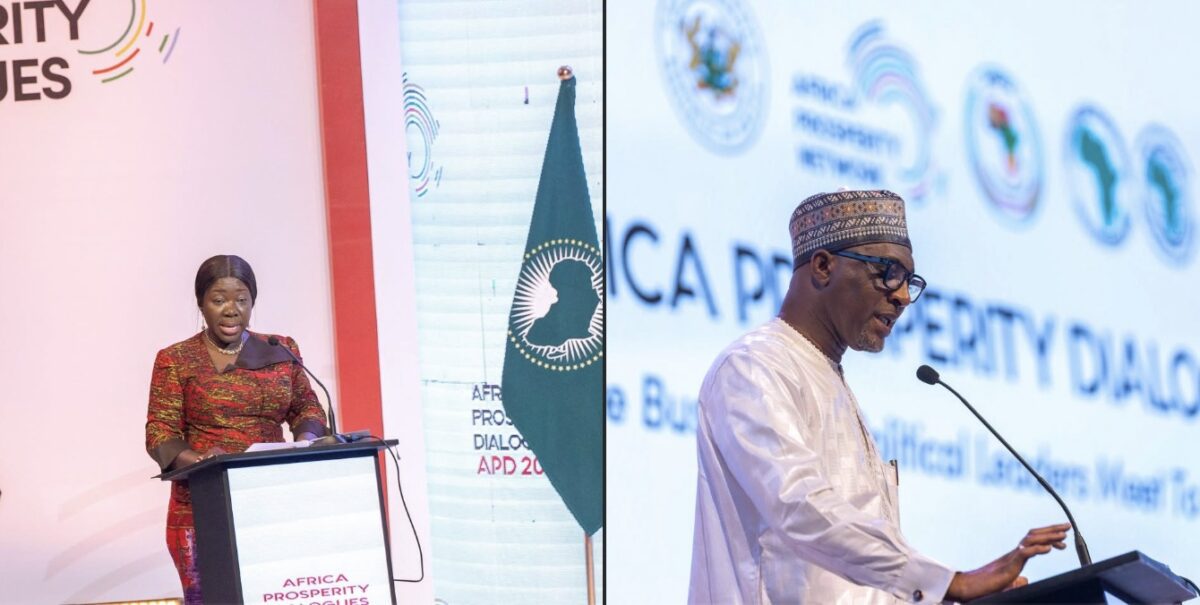
Ghana has reaffirmed its commitment to inclusive industrialisation and trade-led growth under the African Continental Free Trade Area, with a call to place women, youth and small and medium-sized enterprises at the centre of Africa’s single market agenda.
Speaking at the Africa Prosperity Dialogue (APD) 2026 held at the Accra International Conference Centre on Thursday, February 5, 2026, the Minister for Trade, Agribusiness and Industry, Elizabeth Ofosu-Adjare, said Ghana is translating AfCFTA ambitions into actions focused on value addition, industrial growth and export expansion, with women’s empowerment integrated across policy pillars.
Get more exclusive breaking news updates on our WhatsApp channel .
She said since trading began under AfCFTA in January 2021, progress has included nearly 50 ratifications, expanded participation in the Guided Trade Initiative and the adoption of the Protocol on Women and Youth in Trade.
The Minister stated that MSMEs account for over 90 percent of businesses and the majority of employment across Africa, with women leading nearly half of such enterprises in Ghana and youth representing a key source of innovation.

She said government, under President John Dramani Mahama, has refocused policies to accelerate value addition and strengthen export capacity, including expanding the Ministry’s mandate to agribusiness and implementing the Feed the Industry Programme to address raw material supply constraints.
She noted that over 2,800 businesses have been sensitised on export procedures, more than 155,000 entrepreneurs trained, over 6,000 start-ups supported, and access to finance improved for women- and youth-led enterprises under the Ghana Economic Transformation Project backed by the World Bank.
The Minister identified four priorities to unlock AfCFTA potential: full operationalisation of the agreement, investment in trade infrastructure, innovative financing for women and youth enterprises, and stronger public-private and cross-border partnerships.
Also addressing the forum, the Minister for the Interior, Mohammed Mubarak Muntaka, said security, migration governance and border management are critical enablers of economic integration.
He said free movement must be supported by technology-driven and intelligence-led border systems to address threats such as trafficking, terrorism and illicit trade, while facilitating legitimate commerce.
He added that Ghana is strengthening joint border operations, data sharing and inter-agency collaboration to reduce delays and non-tariff barriers affecting SMEs, particularly women and youth.
Chief Executive Officer of the Africa Prosperity Network, Sidig Faroug El Toum, described SMEs as drivers of Africa’s economy, noting they account for over 90 percent of businesses, with women owning about 58 percent and youth making up around 65 percent of start-up founders.
He said APD 2026 aims to deliver practical solutions by bringing together policymakers, financiers, regulators and entrepreneurs to address challenges in finance, logistics, payments, skills and value chain integration.
The dialogue continues with high-level engagements focused on translating AfCFTA policies into measurable outcomes for inclusive growth, industrialisation and shared prosperity across Africa.