

The Domestic Violence Victim Support Unit (DOVVSU) of the Ghana Police Service has called on the public, particularly women experiencing domestic abuse, to report cases promptly to safeguard their wellbeing.
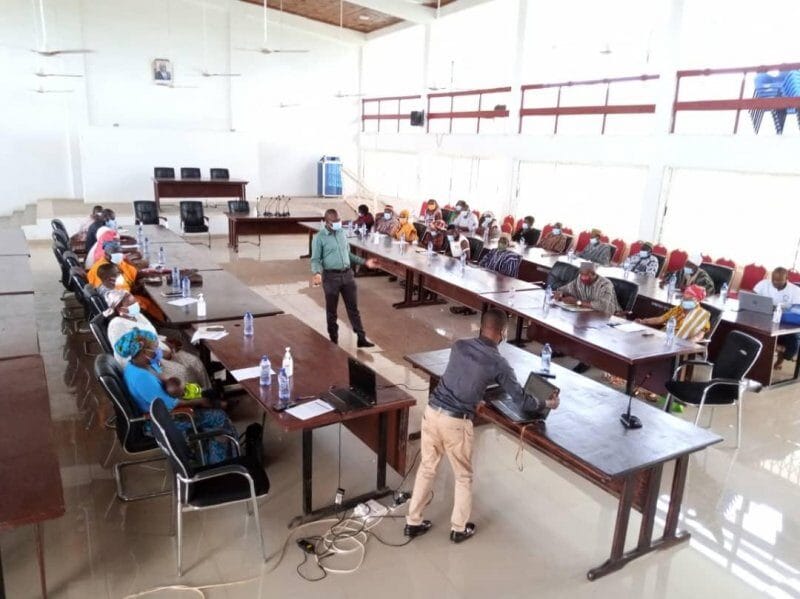
Assistant Superintendent of Police (ASP) Victoria Larbi of the Adenta DOVVSU made the appeal during an engagement with selected women in the municipality.
Get more exclusive breaking news updates on our WhatsApp channel .
The event was organised by the Adenta Municipal Office of the National Commission for Civic Education (NCCE) in collaboration with GIZ and the European Union, focusing on the rule of law and corruption.
ASP Larbi emphasised that DOVVSU was established specifically to handle issues of abuse and that victims should not suffer in silence.

She noted that the Unit protects women, children and men who face various forms of abuse, including physical, emotional, financial, economic, verbal, non-verbal and sexual violence.
She explained that physical abuse involved inflicting bodily harm, while emotional abuse could include mocking, innuendo and body shaming, such as calling someone “Oboshie” (overweight). Keeping silent about such treatment, she warned, could lead to hypertension and prolonged fear.
ASP Larbi added that sexual abuse could involve inappropriate or unapproved touching, stressing that parents must pay attention to their male children as boys were increasingly becoming victims.
“Now, even the boys are also being abused; don’t think that it is only the girls that are prone to sexual abuse.
Some women too are abusing men sexually; they slap their buttocks and touch them inappropriately and they must report too,” she said.
Addressing financial abuse, she explained that when someone responsible for another’s welfare,such as a husband,refuses to provide support or exploits the person financially, it amounts to abuse.
She added that economic abuse also included refusing to provide food for one’s children or women refusing to support husbands when they are in need. Psychological and digital abuses were also highlighted as emerging concerns.
Speaking on corruption, Madam Araba Diaba (Esq.), Head of the Madina Office of the Commission on Human Rights and Administrative Justice (CHRAJ), noted that corruption manifests in bribery, nepotism, embezzlement and favouritism.
She said corrupt practices had far-reaching consequences, affecting healthcare, education, social amenities and broader national development.
Madam Sylvia Osei-Bonsu, the Adenta NCCE Municipal Director, encouraged Ghanaians to join the fight against corruption by reporting such activities. She urged community groups to invite the NCCE and its partner agencies to their meetings for continuous civic education.