
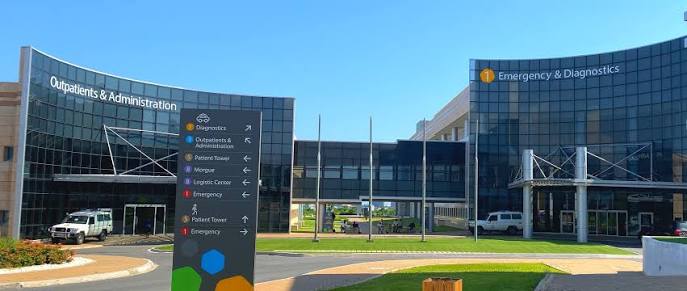
The University of Ghana Medical Centre (UGMC) has expanded its healthcare services with the introduction of Anti-retroviral Therapy (ART) for people living with HIV.
The new service, launched on World AIDS Day, will provide HIV treatment, counselling, care, support and referral services to patients and their families as part of the Centre’s efforts to broaden access to specialised healthcare.
Get more exclusive breaking news updates on our WhatsApp channel .
Speaking at the launch of the 2021 World AIDS Day celebration, Chief Executive Officer of UGMC, Dr Darius Osei, said the facility was ready to offer comprehensive HIV care through a team of trained and experienced health professionals.
He invited people living with HIV and their families to access the Centre’s treatment and counselling services.

The event was held on the global theme, “End inequalities, end AIDS, end pandemics.”
Dr Osei said achieving the global target of ending the HIV epidemic by 2030 would require equitable access to HIV prevention, testing, treatment and care, as well as COVID-19 vaccination and related services for people living with HIV.
He noted that the COVID-19 pandemic had disrupted HIV care in many areas by affecting access to treatment, counselling, testing and referral services, increasing the vulnerability of people living with HIV.
Citing World Health Organization data for 2020, Dr Osei said an estimated 37.7 million people were living with HIV worldwide, with 1.5 million new infections recorded during the year, while only 27.5 million people had access to antiretroviral therapy.
He also referenced Ghana’s 2019 HIV Sentinel Survey, which reported a national HIV prevalence of 2.0 per cent, with Greater Accra recording the country’s second-highest prevalence at 3.2 per cent.
According to him, the figures underscore the importance of regular HIV testing and early access to treatment.
As part of activities marking World AIDS Day, UGMC, in collaboration with the Ayawaso West Municipal Health Directorate, offered free screening for HIV, tuberculosis (TB) and hepatitis to encourage early detection and treatment.
Head of Clinical Care at the National AIDS Control Programme, Dr Nyonuku Akosua Baddoo, said inequalities in access to healthcare continued to hinder progress in the global HIV response.
She stressed that eliminating disparities in healthcare delivery would be critical to ending the AIDS epidemic and improving outcomes for people living with HIV.
Dr Baddoo commended UGMC for introducing ART services, describing the initiative as an important contribution towards improving access to HIV treatment in Ghana.
Ayawaso West Municipal Health Director, Dr Louisa Matey, also praised the Centre’s decision, noting that although the COVID-19 pandemic dominated public health attention, diseases such as HIV, tuberculosis and yellow fever remained major health concerns.
She urged healthcare providers not to neglect other public health priorities and encouraged UGMC to strengthen health education and promote differentiated service delivery for people living with HIV.