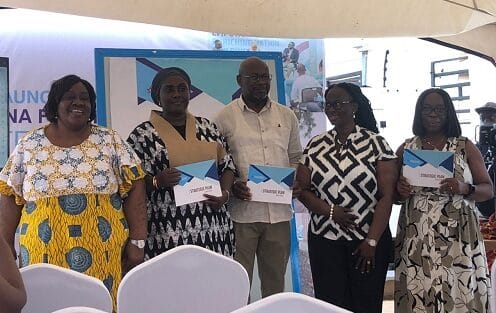
The STAR-Ghana Foundation has unveiled its Second Strategic Plan (2025–2029), outlining a five-year roadmap to enhance citizen engagement, civil society coordination, and accountability in governance across Ghana. The plan builds on the lessons of the Foundation’s first strategic cycle (2018–2023), which saw its transition from a donor-funded programme into a fully independent national non-profit and key convener in Ghana’s civic space.
Speaking at the launch in Accra, Mr Ibrahim-Tanko Amidu, Executive Director of STAR-Ghana, said the strategy seeks to expand citizen voice and influence across national, local, and sectoral governance processes, ensuring that decisions affecting public service delivery, resource allocation, and development outcomes reflect broad participation.
Get more exclusive breaking news updates on our WhatsApp channel .
He emphasised the focus on the inclusion of young people, women, and persons with disabilities, aiming for measurable improvements in civic engagement, democratic accountability, public sector responsiveness, and social inclusion by 2029.
Mr Amidu noted that despite increased awareness of governance issues, active citizen engagement remains limited due to political polarisation and weakened trust in public institutions. He highlighted the need for constructive community-level engagement, dialogue with decision-makers, and monitoring of public policies, beyond partisan activism or protests.
The new strategy builds on STAR-Ghana’s signature 3CL approach: Convening, Catalysing, Coordinating, and Learning, while introducing five thematic priority areas: Civil Society Strengthening; Democratic and Inclusive Governance; Right to Services; Peace and Security; and Natural Resource Governance & Climate. These themes address challenges such as shrinking civic space, reduced donor funding, climate threats, digital activism, economic constraints, and declining public confidence in leadership.
STAR-Ghana plans to empower community action groups, strengthen civil society advocacy, promote policy reforms, support peacebuilding, and advance sustainable resource management, while intensifying support for marginalised groups and promoting local philanthropy to reduce dependence on external donors.
Hajia Hamdiya Ismaila, Chairperson of the Governing Council, described the plan as a timely intervention to strengthen democratic resilience and prevent exclusion of vulnerable groups. She emphasised investing in civil society as essential to good governance and social stability and called for sustainable domestic funding models, including politically neutral state-backed mechanisms.
Expected outcomes by 2029 include a stronger and better-resourced civil society, improved peace and security, increased access to quality health, education, and social protection services, and more resilient natural resource and climate governance. Progress will be tracked through annual reviews, performance dashboards, and monitoring and evaluation frameworks.
The Foundation positioned the Strategic Plan as more than a guiding document, describing it as a national call to action for citizens, government, private sector, academia, media, and development partners to collaborate in shaping Ghana’s democratic future. STAR-Ghana reiterated that empowered and informed citizens are key to achieving a democratic, peaceful, and prosperous nation, urging all actors to protect civic space and accelerate development outcomes.