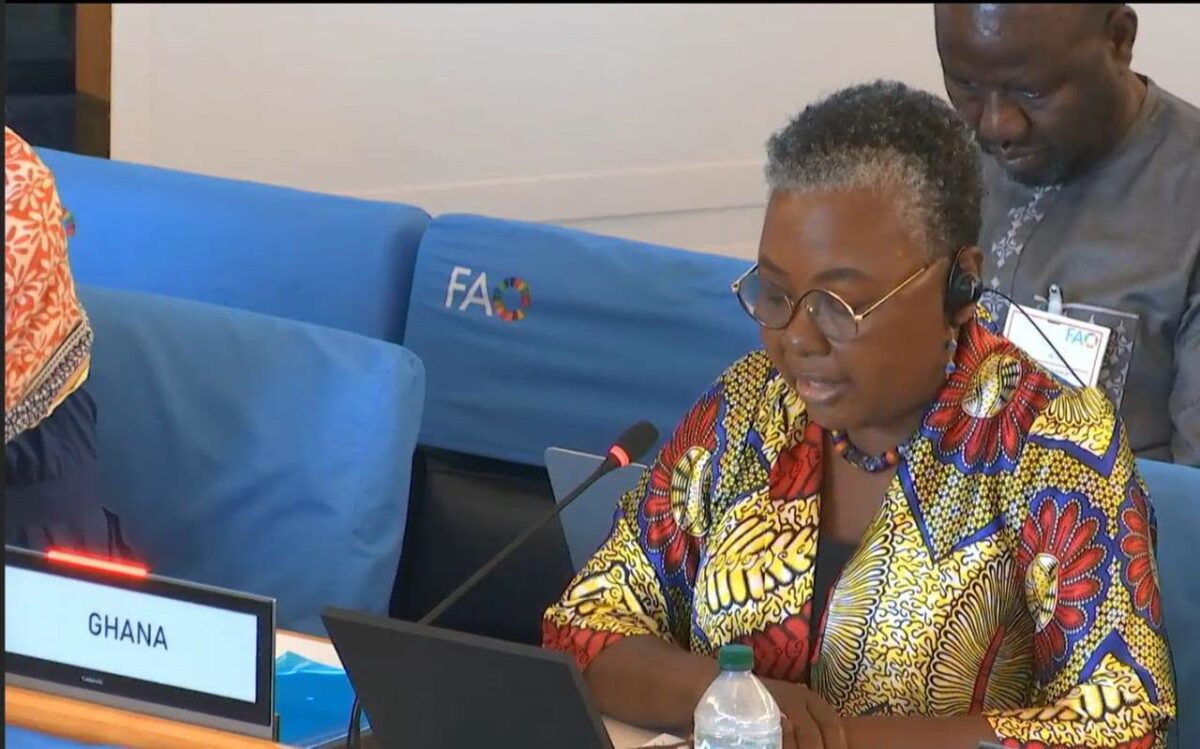
Ghana’s Minister for Fisheries and Aquaculture, Hon. Emelia Arthur, has called for stronger global support for Africa to scale up sustainable aquatic food production and strengthen its blue economy.
She made the call while addressing the 37th Session of the FAO Committee on Fisheries (COFI) in Rome, Italy, where she aligned Ghana with the United Nations Food and Agriculture Organization’s (FAO) Blue Transformation Agenda.
Get more exclusive breaking news updates on our WhatsApp channel .
Minister Arthur said the global community must translate scientific research into bold and actionable strategies to tackle hunger and accelerate the development of blue economies across developing countries.
“Africa’s aquatic food production should—and can—be increased,” she said, calling for greater investment and technology to support the continent’s fisheries and aquaculture sectors.

The Minister highlighted the importance of aquatic foods to Ghana’s food security and livelihoods, noting that more than 3 million Ghanaians depend directly or indirectly on the fisheries and aquaculture value chain.
She said aquatic foods provide between 60 per cent of total animal protein in the Ghanaian diet, while annual fish consumption in Ghana stands at between 20 and 25 kilogrammes per person.
Ghana produced 442,000 metric tonnes of marine fish in 2024, up from approximately 425,000 metric tonnes in 2023. However, inland freshwater capture fisheries continue to face declining yields due to illegal overfishing, habitat destruction and climate-related pressures.
To address these challenges, Minister Arthur outlined a number of measures Ghana has initiated under its broader blue economy agenda.
These include the Fisheries and Aquaculture Act, 2025 (Act 1146), which strengthens maritime enforcement, creates dedicated aquaculture zones and expands the Inshore Exclusion Zone from six to 12 nautical miles to protect small-scale artisanal canoes from industrial trawlers.
She also highlighted the establishment of the Greater Cape Three Points Marine Protected Area in April 2026. The reserve covers 704 square kilometres and safeguards biodiversity across 21 coastal communities.
On illegal fishing, the Minister said Ghana has accelerated electronic vessel monitoring, implemented closed-season mandates and continued structured engagement with the European Union through the Ghana-EU IUU Dialogue Process to address compliance issues.
Ghana has also developed a National Plan of Action for Small-Scale Fisheries in partnership with the FAO and the Fisheries Transparency Initiative (FiTI), aimed at improving access to finance, technology and markets for young people and women fish processors.
Minister Arthur further outlined Ghana’s 10-year Blue Economy Action Plan, which places sustainable aquaculture at the centre of efforts to create jobs, strengthen climate resilience and improve food sovereignty.
She called for stronger global partnerships, stressing that West Africa can demonstrate how scientific research, effective enforcement and community empowerment can build a sustainable ocean economy capable of feeding millions without depleting marine resources.